


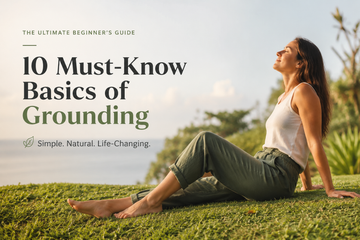
Ten essential basics for beginners exploring grounding, also called earthing. The earth carries a natural negative charge, and skin contact lets free electrons flow in, acting as antioxidants that calm inflammation, explains GroundingWell. Beginners can start outdoors on grass or soil, or use indoor products like grounding sheets for consistent overnight contact. Twenty minutes daily is a good starting point.
If you have heard people talking about grounding but are not quite sure where to start, you are in the right place. Grounding, also known as earthing, is one of the simplest wellness practices you can try, and you may have already done it without realizing it. Every time you have walked barefoot on grass and felt a sense of calm wash over you, that was grounding. At GroundingWell, we believe that reconnecting with the earth is one of the most powerful and accessible things you can do for your health. Here are 10 must know basics to help you understand what grounding is, why it matters, and how to get started today.Table of Contents
- Key Takeaways
- 1. Grounding and Earthing Mean the Same Thing
- 2. The Earth Has a Negative Electrical Charge
- 3. Free Electrons Act as Natural Antioxidants
- 4. Modern Life Has Disconnected Most of Us From the Earth
- 5. Natural Conductive Surfaces Work for Grounding Outdoors
- 6. Twenty Minutes a Day Is a Good Place to Start
- 7. You Can Ground Indoors Using a Conductive Product
- 8. The Research Base Is Real and Growing
- 9. Grounding Is Not a Substitute for Medical Care
- 10. Starting Is Easier Than You Think
- Conclusion
- FAQs:
Key Takeaways
- Grounding means making direct electrical contact between your body and the surface of the earth.
- The earth carries a natural negative charge, and contact with it allows free electrons to flow into your body.
- These electrons act as natural antioxidants, reducing inflammation and calming the nervous system.
- Over 20 peer reviewed studies have explored grounding since 2004 with findings across sleep, cortisol, and inflammation.
- You can ground outdoors for free or use a conductive indoor product to stay grounded while you sleep.
1. Grounding and Earthing Mean the Same Thing
You may see both terms used across articles, products, and research papers. Grounding and earthing refer to the same practice: making direct physical contact between your skin and the surface of the earth. The word earthing is used more commonly in scientific literature. Grounding is more common in everyday wellness language. In the context of this article and the work done at GroundingWell, the two words mean exactly the same thing.
It is worth noting that grounding is also used as a term in psychology, where it refers to mindfulness techniques that help anchor a person to the present moment during anxiety or panic. That is a different practice entirely. When we talk about grounding at GroundingWell, we are always referring to the physical, electrical connection between the body and the earth.
2. The Earth Has a Negative Electrical Charge
This is the foundation of how grounding works, and it is not a wellness theory. It is basic physics. The earth carries a mild but continuous negative electrical charge generated by solar radiation, lightning activity, and atmospheric dynamics. This charge sits on the surface of the earth and is available to any conductive object that makes contact with it. As explored by the EarthingHub beginner guide to earthing, electrical grounding is a well understood concept in engineering. Buildings, appliances, and electrical systems are grounded to stabilize charge. The idea behind earthing is that the human body may benefit from the same kind of electrical connection.
The key mechanism that researchers have studied is this: when your bare skin touches the earth, free electrons flow from the earth into your body. Your body is conductive. The earth is conductive. Remove the insulating barrier between them, specifically rubber soled shoes, synthetic flooring, and insulated beds, and electrons can flow freely in both directions.
3. Free Electrons Act as Natural Antioxidants
Once inside the body, free electrons from the earth are believed to do something remarkable. They act as natural antioxidants. Free radicals are positively charged molecules produced during normal cellular metabolism and the inflammatory response. When they accumulate in excess, they damage cell membranes, DNA, and proteins, contributing to chronic inflammation and accelerated aging.
Antioxidants from food and supplements work by donating electrons to neutralize free radicals. The electrons from the earth do exactly the same thing. As described in a comprehensive review published by Chevalier and colleagues in the Journal of Inflammation Research, the influx of free electrons absorbed into the body from the earth serves as powerful anti inflammatory reinforcement for the immune system. You can think of grounding as receiving antioxidants through your feet, continuously and for free.
4. Modern Life Has Disconnected Most of Us From the Earth
For virtually the entire span of human history, people were grounded by default. They walked barefoot or wore leather soled shoes. They slept close to the ground. Floors were made of earth, stone, or wood. There was near constant contact with natural surfaces.
Today that has changed completely. According to the Environmental Protection Agency, Americans now spend approximately 90 percent of their lives indoors. Rubber soled shoes insulate us from the ground outdoors. Vinyl flooring, carpet, and elevated beds insulate us indoors. Most people in the modern world have almost no direct skin contact with the earth on any given day. As noted by Healthline in their grounding overview, this level of disconnection is genuinely new in human history, and researchers are exploring whether it is contributing to the rise in chronic inflammation, sleep disruption, and nervous system dysregulation that defines modern health.
5. Natural Conductive Surfaces Work for Grounding Outdoors
If you want to try grounding outdoors, the surfaces that work are simply those that naturally conduct electricity. These include grass, soil, sand, mud, unpainted concrete, natural stone, and natural bodies of water such as lakes, rivers, and the ocean.
Surfaces that do not work include asphalt, sealed wood decking, rubber, vinyl flooring, carpet, and painted concrete. These materials insulate rather than conduct. The simplest test is this: does electricity pass through it naturally? If yes, grounding contact is likely possible. If it is an insulating material, skin contact alone will not establish an electrical connection with the earth.
- Works for grounding: grass, soil, sand, unpainted concrete, natural stone, ocean, lakes and rivers.
- Does not work: asphalt, rubber, vinyl, carpet, sealed wood decking, painted concrete.
- Even going barefoot on damp grass produces stronger grounding than dry grass, as moisture improves conductivity.
6. Twenty Minutes a Day Is a Good Place to Start
There is no fixed prescription for how much grounding is enough. Any direct earth contact is better than none. However, published research and the experience of practitioners consistently point to a minimum of around 20 to 30 minutes of consistent daily grounding as a starting point where people begin to notice effects.
The studies that showed the most significant results used longer durations. The landmark cortisol normalization study by Ghaly and Teplitz, published in the Journal of Alternative and Complementary Medicine, had participants sleep grounded for 8 weeks, producing measurable reductions in nighttime cortisol and significant improvements in sleep, pain, and stress. The practical lesson for beginners is that consistency matters more than duration. Twenty minutes every day will deliver more benefit than two hours once a week.
7. You Can Ground Indoors Using a Conductive Product
One of the most common questions beginners ask is what to do about seasons, weather, or a lifestyle that makes daily outdoor barefoot time unrealistic. The answer is indoor grounding products. These are the same type of products used in the peer reviewed research studies that demonstrated grounding benefits.
The ground port of any standard three prong wall outlet in a US home, the small round hole at the bottom of the socket, is not connected to electricity. It is connected to a grounding rod driven into the soil beneath the building. GroundingWell’s mats, bedsheets, and fitted sheets use conductive silver fibers woven into quality fabric. A cord runs from the product to the ground port of your wall outlet, creating a continuous conductive pathway from the earth through the building wiring to the conductive fibers in contact with your skin. The electron transfer happens the same way it would if you were barefoot on the grass.
8. The Research Base Is Real and Growing
Grounding is not without scientific support. More than 20 peer reviewed studies on grounding and earthing have been published since 2004. These have examined effects on cortisol levels, sleep quality, inflammatory markers, heart rate variability, blood viscosity, wound healing, pain levels, and mood.
The study population has ranged from adults with chronic pain and sleep disorders to healthy athletes and, most remarkably, premature infants in a neonatal intensive care unit. That last group is important: premature infants cannot experience a placebo effect, yet grounding produced immediate improvements in their autonomic nervous system function as measured by heart rate variability. The research is still emerging and most studies have used small sample sizes, but the consistency of findings across independent research groups and the absence of any reported negative effects give grounding a stronger evidence base than most comparable wellness practices.
9. Grounding Is Not a Substitute for Medical Care
This is an important basic for every beginner to understand. Grounding is a wellness practice, not a medical treatment. The research on grounding explores potential benefits for inflammation, sleep, stress, and recovery. It does not establish grounding as a cure or treatment for any disease or condition. As WebMD notes in their grounding overview, because grounding’s health benefits are still being researched, you should never use it in place of medical treatment. If you have a health condition, chronic illness, or are taking medication, speak with your healthcare provider before starting a grounding practice, particularly if you use an indoor grounding product.
With that said, grounding is widely considered safe for healthy adults. It is noninvasive, requires no medication, and the research published to date has found no negative effects associated with grounding practice. For most people, the question is not whether to try it but how to make it a consistent part of daily life.
10. Starting Is Easier Than You Think
This is perhaps the most important basic of all. Grounding does not require a significant investment of time, money, or lifestyle change. If you have a patch of grass, a beach nearby, or even a concrete sidewalk that is unpainted, you can start today by taking off your shoes and standing on it for 20 minutes.
If outdoor grounding is not realistic for you on a consistent basis, the easiest entry point is a grounding sheet on your bed. You sleep every night already. A GroundingWell grounding sheet turns those hours of sleep into hours of consistent earth contact without adding a single item to your daily routine. Many people who start with a grounding sheet notice differences in sleep quality and morning energy within a few weeks of regular use.
The simplicity of grounding is one of its defining strengths. There is nothing to measure, nothing to track, and nothing to optimize. You connect with the earth and let the rest happen. For a practice with a genuine scientific basis and no known downside, the barrier to starting could not be lower.
Conclusion
Grounding is one of the oldest human experiences, made newly relevant by how thoroughly modern life has removed it from our daily existence. The basics are simple: the earth has electrons, your body can absorb them, and the research suggests this has real effects on inflammation, stress hormones, sleep quality, and nervous system balance.
Starting is free. Going barefoot in your backyard for 20 minutes costs nothing and requires nothing. If you want to extend those benefits into your sleep and the rest of your day, indoor grounding products make that consistency effortless. Either way, the earth is there whenever you are ready.
Explore all GroundingWell grounding products to find the option that fits your life. If you have questions about which product is right for you or how to get started, we are always happy to help. Contact us any time.
FAQs:
What is grounding and how does it work?
Grounding, also known as earthing, is the practice of making direct physical contact with the surface of the earth. The earth carries a mild but continuous negative electrical charge. When bare skin touches natural ground, free electrons flow from the earth into the body. These electrons act as natural antioxidants, neutralizing positively charged free radicals that drive inflammation and oxidative stress. Published research has found measurable physiological effects from grounding including changes in cortisol levels, inflammatory markers, and autonomic nervous system function.
What surfaces work for grounding outdoors?
Conductive natural surfaces all work for grounding. Grass, soil, sand, mud, unpainted concrete, and natural stone allow electrons to transfer into the body through bare skin contact. Natural bodies of water including lakes, rivers, and the ocean also conduct well. Surfaces that do not conduct include asphalt, sealed wood, rubber, vinyl, and painted concrete. If a surface lets electricity pass through it naturally, it supports grounding.
How long should a beginner ground each day?
Any amount of grounding is better than none. Beginners often start with 20 to 30 minutes of barefoot outdoor time each day. The most significant results in published research involved subjects sleeping grounded for 8 consecutive weeks, suggesting that longer duration and consistent daily practice deliver the most meaningful benefits. Using a grounding sheet while you sleep is the simplest way to achieve extended daily grounding without adding anything to your schedule.
Do grounding mats and sheets really work the same as being outside barefoot?
Grounding products work by connecting to the ground port of a standard wall outlet, which is physically connected to a grounding rod in the earth beneath the building. This creates a conductive pathway for electrons to flow from the earth into the conductive fibers touching your skin. Published research studies that demonstrated measurable benefits for cortisol, sleep, and inflammation all used this type of indoor grounding system. The mechanism is the same whether you are barefoot on grass or in contact with a properly grounded indoor product.
Is grounding safe for everyone?
For the vast majority of healthy adults, grounding is considered safe. Barefoot outdoor grounding carries no electrical risk. Indoor grounding products that connect to the ground port carry electrons from the earth only and do not connect to the live electrical circuit. People with pacemakers or implanted electrical devices should consult their physician. People taking blood thinning medications should speak with their doctor. Pregnant women should check with their healthcare provider. Always verify your outlet is properly grounded before using any indoor grounding product. Grounding is not a substitute for medical care.


